Medical review: R. Dewayne Book, MD, Chief Medical Officer, Advaita Integrated Medicine
Last medically reviewed: 10/21/2026
Most people describe transcranial magnetic stimulation (TMS) as a repetitive tapping or knocking sensation on their scalp. The most common TMS therapy side effects are mild headaches and scalp discomfort, which usually improve as treatment continues. Serious complications are rare.
Still, the idea of magnetic stimulation directed at your brain can sound intimidating, especially when you don’t know exactly what to expect.
If you’re considering TMS, you’ve probably already been through a lot. Maybe you’ve tried several antidepressants, spent years in therapy, or wondered whether anything else could help your depression.
It’s understandable to be cautious about another treatment, particularly one that sounds so different from what you’ve tried before.
So, let’s talk about what TMS actually feels like, what side effects are possible, and how Advaita Integrated Medicine (AIM) helps keep you comfortable throughout treatment.
What Does TMS Feel Like During a Session?
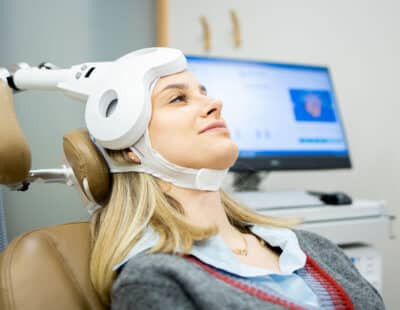
During TMS, you’ll feel a series of taps against your scalp and hear clicking sounds as the device delivers magnetic pulses. You’re fully awake, you can communicate with your treatment team, and no anesthesia or sedation is needed. Most sessions last approximately 20 to 40 minutes.
The experience is different from what many people imagine when they first hear about brain stimulation.
Here’s what a typical appointment looks like.
Getting Comfortable in the Treatment Chair
You’ll sit in a reclining chair while a member of your care team positions a helmet-like treatment device against your head. The device contains a magnetic coil that delivers precisely controlled pulses to areas of the brain involved in mood regulation. You’ll also wear earplugs because the device makes an audible clicking sound during treatment. Nothing penetrates your skin, and there’s no injection or IV.
What the Magnetic Pulses Feel Like
Once treatment begins, you’ll hear rhythmic clicking or knocking and feel corresponding taps on your scalp.
Some people compare the sensation to someone lightly tapping their head with a finger. Others describe a firmer knocking sensation, especially during their first few appointments. You may also notice brief twitching in the muscles around your forehead, jaw, or face.
These sensations occur while the magnetic pulses are being delivered and generally stop when the stimulation pauses.
Why Your First Treatment Feels Different
Your first treatment session involves an additional step called brain mapping and motor threshold calibration.
At AIM, a psychiatrist identifies an area of the brain responsible for movement, called the motor cortex. Brief magnetic pulses are delivered while the physician observes your physical response.
You may notice your hand or fingers twitch during this process. That response helps determine your individual motor threshold, which is the amount of stimulation needed to produce a measurable muscle response. Your physician uses this information to establish an appropriate starting treatment intensity and identify the treatment location. This calibration helps personalize treatment rather than relying on the same settings for every patient.

Does TMS Therapy Hurt?
TMS isn’t painful for most people, but it can be uncomfortable, particularly during the first few sessions. The tapping sensation may feel surprisingly strong at first, and some patients experience temporary soreness around the treatment site. Discomfort typically becomes more manageable as they adjust to the sensation.
The important thing to understand is that you don’t have to silently tolerate significant discomfort.
If the tapping becomes painful, tell your TMS technician. Depending on your treatment needs, the team may be able to adjust the device’s position or stimulation intensity to improve comfort.
Some people are naturally more sensitive to the sensation than others. Sensitivity can also change over the course of treatment.
At AIM, your psychiatrist checks in weekly and can reassess your treatment settings as needed. The goal is to deliver clinically appropriate stimulation while helping you remain as comfortable as possible.
What Are the Most Common TMS Therapy Side Effects?
The most common side effects of TMS are headache, scalp discomfort, and temporary muscle twitching near the treatment area. Lightheadedness and fatigue can also occur. These effects are generally mild to moderate, often resolve shortly after treatment, and tend to decrease over the first several sessions.
Understanding which symptoms are expected and which deserve closer attention can make the experience less uncertain.
Common, Less Common, and Rare TMS Side Effects
| Frequency | Possible side effects | What to expect |
| Common | Headache and scalp discomfort | Usually temporary and often improve with repeated sessions |
| Common during treatment | Facial or jaw muscle twitching, tapping sensations | Usually stop when stimulation stops |
| Less common | Lightheadedness, dizziness, fatigue | Often brief, but tell your provider if symptoms persist |
| Less common | Jaw pain, increased emotional sensitivity, or temporary changes in how you feel | Should be discussed with your treatment team |
| Rare but serious | Seizure, mania or hypomania, hearing injury without adequate protection | Require screening, monitoring, and appropriate precautions |
Frequency and severity vary by device, treatment protocol, and individual risk factors.
How Long Do TMS Side Effects Last?
For most patients, discomfort is greatest during the first several treatments. Headaches and scalp tenderness often improve as your body adjusts to repeated stimulation. Other sensations, such as facial twitching, generally occur only while the pulses are active.
If you’re still experiencing discomfort after the first week, that doesn’t necessarily mean you need to stop treatment. However, persistent or worsening symptoms should always be discussed with your care team.
What Can Help With TMS Side Effects?
Depending on the symptom, your provider may recommend:
-
- Adjusting the device: Small positioning changes can sometimes reduce scalp or jaw discomfort.
-
- Reassessing stimulation intensity: Treatment settings may be adjusted when clinically appropriate.
-
- Over-the-counter pain relief: Your provider may approve a medication such as acetaminophen for headaches.
-
- Monitoring symptoms: Tracking when discomfort occurs can help identify patterns and guide adjustments.
At AIM, side effect management is part of your ongoing treatment plan, not something you have to figure out independently.

What Does TMS Feel Like After a Session?
Most people feel well enough to resume their normal activities immediately after TMS. Some experience a mild headache or temporary fatigue, while others notice very little difference physically. Because treatment doesn’t require sedation, you can generally drive yourself home, return to work, or continue with your day.
What you probably won’t experience is an immediate, dramatic improvement in depression symptoms. TMS works gradually. The effects develop over repeated treatments rather than occurring all at once.
According to Dr. R. Dewayne Book, Chief Medical Officer at AIM, early improvements may appear in areas such as:
-
- Energy and motivation
-
- Sleep quality
-
- Appetite
-
- Concentration and mental clarity
-
- Mood and emotional outlook
These changes don’t happen in the same order or at the same pace for everyone. Some patients notice improvements within the first couple of weeks. Others need more time, and not everyone responds to treatment.
It’s also possible to experience temporary emotional sensitivity or fluctuations in mood early on. If you’re feeling unusually irritable, emotionally overwhelmed, or noticeably worse, tell your treatment team rather than assuming it’s a normal part of recovery.
What Are the Rare Side Effects of TMS?
Serious TMS side effects are uncommon, but they deserve mention before treatment. The most significant known risk is a seizure. Other rare concerns include mania or hypomania and hearing injury when adequate ear protection isn’t used. A thorough evaluation helps identify factors that could increase these risks.
Seizures
TMS delivers controlled magnetic stimulation, and in rare circumstances, that stimulation can trigger a seizure.
Research and clinical safety monitoring indicate that this is an uncommon complication when established treatment guidelines are followed.
Certain factors can increase seizure risk, including a history of seizures, neurological conditions, sleep deprivation, significant alcohol use or withdrawal, and medications that lower the seizure threshold.
That’s why your evaluation includes a careful review of your medical history, medications, and other relevant risk factors.
Hearing Changes
TMS devices produce loud clicking sounds that can potentially affect hearing without adequate protection. To reduce this risk, patients wear earplugs throughout treatment. If you have hearing loss, tinnitus, or another hearing-related concern, discuss it with your provider before beginning.
Mania or Hypomania
Rarely, TMS may contribute to a period of unusually elevated mood or increased energy, particularly in people with bipolar disorder. This is known as mania or hypomania.
Symptoms can include needing much less sleep, racing thoughts, unusually rapid speech, impulsive behavior, or feeling excessively energized.
A psychiatric evaluation helps identify bipolar symptoms and determine whether TMS is appropriate.
Changes in Depression Symptoms
Some patients experience temporary emotional sensitivity during treatment. Depression symptoms may also fluctuate, and occasionally they can worsen. At AIM, ongoing symptom monitoring helps your psychiatrist identify changes that deserve attention.
Contact your care team promptly if you notice significant mood changes, new symptoms, or worsening depression. If you develop suicidal thoughts or feel unsafe, seek urgent help by calling or texting 988, or call 911 in an immediate emergency.

Does TMS Cause Memory Loss or Long-Term Side Effects?
TMS isn’t generally associated with the memory loss, confusion, or cognitive impairment that can occur with some other brain stimulation treatments. It also doesn’t require anesthesia or introduce medication into your bloodstream. However, research into all possible long-term effects is ongoing, so no treatment should be described as completely risk-free.
One common misconception is that TMS is another form of electroconvulsive therapy (ECT), sometimes called “shock therapy.”
They’re different treatments.
ECT uses a controlled electrical current to intentionally produce a brief seizure under general anesthesia. TMS uses magnetic pulses to stimulate targeted brain regions without intentionally causing a seizure or requiring sedation.
This distinction matters when considering memory-related side effects.
In clinical studies of TMS, researchers generally haven’t observed the memory impairment associated with ECT.
TMS also avoids certain systemic side effects associated with antidepressant medications, such as weight changes, sexual dysfunction, or dry mouth. That doesn’t make antidepressants unsafe or inferior. Medication helps many people manage depression successfully, and TMS can sometimes be used alongside it.
As for TMS long-term side effects, available evidence is generally reassuring, but ongoing research is necessary to better understand long-term safety and outcomes.
Who Shouldn’t Get TMS Therapy?
TMS is appropriate for many adults with treatment-resistant depression, but certain medical conditions, implants, or risk factors may make it unsafe or require additional evaluation. Your provider needs a complete medical and psychiatric history before determining whether treatment is suitable.
Important considerations include:
-
- Metal implants in or near the head: Certain clips, plates, cochlear implants, or other metal objects may interact dangerously with magnetic stimulation. Ordinary dental fillings are generally not a contraindication.
-
- Implanted electronic devices: Pacemakers, neurostimulators, and other devices may require special evaluation or rule out treatment.
-
- Seizure history: Previous seizures, epilepsy, or conditions that increase seizure risk require careful assessment.
-
- Traumatic brain injury: A history of significant head injury may affect treatment eligibility.
-
- Bipolar disorder: Screening is important because of the potential risk of mania or hypomania.
-
- Pregnancy: Safety information is more limited, so an individualized risk-benefit discussion is necessary.
Your current medications, substance use history, and overall medical condition are also important. Learn more about TMS therapy at AIM, including eligibility, treatment expectations, and available services.

How Does AIM Keep TMS Treatment Comfortable and Safe?
At Advaita Integrated Medicine, TMS treatment includes direct psychiatrist involvement from the initial evaluation through the treatment course. Your physician establishes individualized stimulation settings, meets with you weekly, tracks depression symptoms using a standardized assessment, and makes adjustments when needed.
That ongoing oversight is an important part of how AIM approaches comfort and safety.
1. A Full Psychiatric Evaluation Before Treatment
Your first appointment is a comprehensive evaluation. The physician reviews your depression history, previous treatments, current medications, and any conditions that might affect treatment safety.
That information helps determine whether TMS is appropriate and whether additional psychiatric care or therapy may also be beneficial.
2. Personalized Mapping and Dosing
On your first treatment day, your psychiatrist identifies the appropriate stimulation target and calibrates treatment intensity.
AIM primarily uses deep TMS, which delivers magnetic stimulation through a specialized coil designed to reach a broader and deeper area than conventional TMS coils. These individualized settings establish the starting point for your treatment.
3. Weekly Psychiatrist Visits
Your needs may change over the course of treatment.
Some patients become more sensitive to magnetic stimulation, while others require adjustments to maintain an appropriate treatment intensity. At AIM, your psychiatrist meets with you every week to review how you’re feeling, assess side effects, and adjust treatment when appropriate.
4. Objective Depression Tracking
AIM uses the Hamilton Depression Rating Scale, a clinician-administered assessment that measures depression symptom severity. Your psychiatrist reviews these scores throughout treatment rather than relying exclusively on how you feel during any single appointment.
This is particularly helpful when subtle changes in sleep, energy, or concentration appear before you notice an improvement in mood. It also allows the care team to identify when treatment may need to be reassessed.
The result is a treatment experience in which comfort, symptoms, and clinical progress are evaluated together.
TMS Side Effects: Frequently Asked Questions
Can you drive after TMS therapy?
Yes. Most patients can drive themselves to and from TMS appointments because the procedure doesn’t require anesthesia or sedation. If you experience significant dizziness or another unexpected symptom, speak with your provider before driving.
Is TMS the same as shock therapy?
No. TMS and electroconvulsive therapy (ECT) use different methods. TMS delivers magnetic pulses while you’re awake, whereas ECT uses an electrical current to produce a controlled seizure under anesthesia.
Are deep TMS side effects different from regular TMS?
Deep TMS and conventional repetitive TMS share many potential side effects, including headache, scalp discomfort, and temporary facial muscle twitching. The specific frequency and severity can vary with the device, coil design, and treatment settings.
Can I keep taking antidepressants during TMS?
Often, yes. Many patients receive TMS while continuing antidepressant medication. However, your psychiatrist should review all medications for potential interactions and seizure-related risks. Don’t stop or change your prescription without medical guidance.
Does TMS make you tired?
Some people experience temporary fatigue after a TMS session, although it isn’t among the most prominent treatment-related side effects. Others feel no unusual tiredness. Persistent or worsening fatigue should be discussed with your provider because depression, sleep problems, medications, and other factors can contribute.

Ready to Find Out if TMS Is Right for You?
It’s reasonable to have questions about what TMS feels like, especially if previous treatments haven’t provided the relief you hoped for.
At Advaita Integrated Medicine in Raleigh, you’ll have a psychiatrist involved throughout treatment, with weekly check-ins, personalized dosing, and ongoing symptom monitoring. We’re in-network with most major insurance providers, and AIM currently offers TMS consultations without a waitlist.
See if TMS is right for you by scheduling a full psychiatric evaluation.
Have questions about how TMS would feel for you? Call 919.893.4465. We’re happy to talk through what you can expect.
Medical references