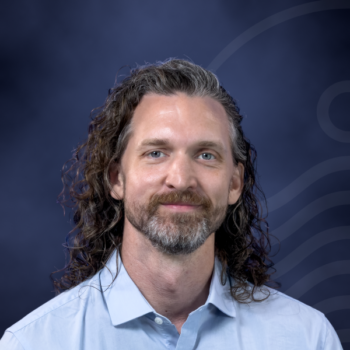
Dr. Tim O’Connor, MD
Psychiatrist
FDA-Approved Treatment for Severe Depression
In-Network with Insurance
No Waitlist

In addition to offering Transcranial Magnetical Stimulation (TMS) for treatment-resistant depression at our Raleigh location, we also offer psychiatry and therapy across all of our locations in Raleigh, Chapel Hill, Cary, and Telehealth across North Carolina.
TMS often works best when combined with therapy and psychiatric care. As an integrated practice, we can coordinate these services together to give you more complete and connected support.
Transcranial magnetic stimulation (TMS) is a therapy that uses magnetic fields to activate nerve cells in the brain. We primarily use it to treat treatment-resistant depression, meaning depression that hasn’t improved with medication or other treatments.
However, TMS can also help with other conditions, including obsessive-compulsive disorder (OCD), anxiety, PTSD, Parkinson’s disease, and smoking cessation.
Start TMS For Depression Relief
TMS did not happen overnight. It began in 1985 when a team of researchers in England made a breakthrough: they discovered that magnetic pulses delivered outside the skull could activate nerve cells inside the brain — precisely enough to cause a volunteer’s hand to move on command. It was a moment that laid the foundation for TMS.
What followed was decades of clinical research to understand what else this technology could do. Over time, that work earned formal recognition from the FDA — approving TMS for treatment-resistant depression in 2008, OCD in 2018, and smoking cessation in 2020.
FDA Approval Timeline:
To understand TMS, it helps to understand what’s happening in the brain when someone has depression.
In people with treatment-resistant depression, certain areas of the brain — particularly the prefrontal cortex, which regulates mood — show reduced activity. The nerve cells in these regions are not communicating the way they should, and antidepressants alone are not enough to fix that for everyone.
TMS targets this directly. The device delivers focused magnetic pulses to the underactive areas of the brain. Those pulses create small electrical currents that stimulate the nerve cells, encouraging them to fire and communicate more effectively. Over the course of a full treatment cycle, this repeated stimulation essentially helps rewire those neural pathways — restoring activity in regions that depression has quieted.
TMS targets this directly. The device delivers focused magnetic pulses to the underactive areas of the brain. Those pulses create small electrical currents that stimulate the nerve cells, encouraging them to fire and communicate more effectively. Over the course of a full treatment cycle, this repeated stimulation essentially helps rewire those neural pathways — restoring activity in regions that depression has quieted.
Unlike medication, TMS does not introduce any chemical into your body. It works entirely through targeted magnetic stimulation, which is why it does not carry the same side effects that many antidepressants do.
Talk to Someone About TMS
If you are considering TMS, there is a good chance you have already tried antidepressants.
Here is how the two approaches compare:
Antidepressants work by adjusting the levels of neurotransmitters like serotonin and dopamine throughout your entire body. TMS works differently — it targets specific regions of the brain directly with magnetic pulses, without introducing any substance into your system.
Antidepressants are typically the first line of treatment for depression and work well for many people. TMS is specifically designed for patients who have tried antidepressants and not found adequate relief — what clinicians call treatment-resistant depression.

Antidepressants can cause a wide range of systemic side effects including weight changes, sexual dysfunction, sleep disruption, and emotional blunting.
TMS side effects are localized and mild — most commonly a slight headache or scalp discomfort during the first few sessions that fades over time.
Both antidepressants and TMS take time to work. Antidepressants typically require four to six weeks before a meaningful change in mood is felt. With TMS, most patients begin noticing improvement within the first one to two weeks of treatment, though the full benefit is usually felt after completing the entire course.
Yes. TMS and antidepressants are able to be combined. Many patients continue their medication while undergoing TMS, and research suggests the combination can improve outcomes for both treatments.

TMS was initially used for treatment-resistant depression and has stood the test of time as an effective treatment for depression.
Over the years, TMS has shown promise for other conditions. While we only use TMS for depression, it can be useful to understand other conditions it treats.
Up to 30% of people with depression do not respond to antidepressant medication. TMS was designed with these patients in mind.
Studies show that TMS not only reduces depression symptoms but helps more than one-third of patients reach full remission.
A large overview of 81 studies with over 4,000 patients confirmed that TMS significantly outperformed placebo treatment.

TMS has shown strong results for OCD. In clinical research, 38% of patients who received TMS reported meaningful symptom improvement, compared to just 11% in the placebo group.
In a pilot study, 90% of patients who received TMS for smoking reported staying smoke-free and having fewer cravings at a 25-day follow-up. These results have been supported by other similar studies.
While research is still growing, TMS shows early promise for both anxiety disorders and PTSD, particularly for patients who have not found relief through medication or therapy alone.

Not all TMS is the same. There are three main types, each designed to deliver magnetic stimulation in a slightly different way — some reach deeper into the brain, while others focus on specific surface-level regions.
Understanding the differences can help you feel more confident going into treatment. Your provider will review your history and recommend the approach that is the best fit for you — there is no one-size-fits-all answer here.
The original form of TMS, used primarily in research settings. Single pulses are delivered to measure brain activity and response.
This is the most common type used in clinical treatment. rTMS delivers magnetic pulses at a set pace to areas of the brain connected to depression. The repeated stimulation helps rewire communication between nerve cells, which can ease depressive symptoms over time.
Deep TMS is the primary type of TMS therapy that we use. Deep TMS uses a different design that reaches further into the brain than standard rTMS. This allows it to stimulate deeper regions that play a role in mood and behavior. Research shows dTMS improved symptoms in over 75% of patients with major depressive disorder, often with fewer side effects.

TMS is done in an outpatient setting. You sit in a reclined chair while one of our team members places a small, lightweight device against your head — similar to a helmet or headset. It rests comfortably near the area of the brain being treated and never breaks the skin or requires any kind of insertion.
Each session typically lasts between 20 and 40 minutes. Most treatment courses run 5 days a week for 4 to 6 weeks. During the session you will hear a clicking sound and feel a gentle tapping sensation on your scalp — most patients adjust to this quickly. You are fully awake the entire time with no sedation needed. When the session ends, you can drive yourself home and return to your normal day right away.
Most people can return to their regular routine immediately after each session. Some patients begin to notice mood improvements after the first one to two weeks, though it can take longer depending on the individual. Results vary based on factors like the severity of your condition, your overall health, and whether you are using other treatments at the same time.

TMS is considered safe and well-tolerated by most patients. The most common side effects are mild and can include:
These side effects typically fade after the first few sessions. If they persist, our care team can work with you to adjust the intensity of the stimulation or recommend over-the-counter pain relief.

Like any other medical treatment, TMS is not right for everyone. Because TMS works by delivering magnetic pulses to the brain, certain medical conditions or implants can make it unsafe or less effective.
That is why a thorough evaluation with your provider is always the first step — not just to confirm you are a good candidate, but to make sure treatment is tailored to your specific situation.
You may not be a candidate for TMS if you have:
This list is not exhaustive. Always share your full medical history with your provider before starting TMS, including any medications you are taking and any past procedures or surgeries. If something disqualifies you from TMS, our care team will work with you to find an alternative path forward — being ineligible for one treatment does not mean you are out of options.

Yes, and it often works better when it is. Many patients receive TMS alongside antidepressant medication, cognitive behavioral therapy (CBT), or other forms of psychotherapy. Combining treatments allows your care team to address depression from multiple angles at once, which can lead to stronger and longer-lasting results.
Insurance coverage for TMS has expanded significantly since its FDA approval. Many major insurance providers cover TMS for treatment-resistant depression, though requirements vary by plan.
Medicare and Medicaid coverage varies and is not always guaranteed. We recommend contacting your insurance provider directly to confirm your benefits before starting treatment.
Keep in mind, our team is always available to help you navigate the insurance process.

This can be a common concern, especially if you’ve tried multiple depression treatments. While TMS is effective for many people, it is not a guaranteed solution for everyone. If you complete a full course of TMS and do not see the improvement you were hoping for, that does not mean you are out of options. Depression and other mental health conditions often require trying more than one approach before finding what works.
Our team will work with you to review your response, adjust the treatment plan if needed, and explore other evidence-based options. You deserve care that fits your needs — and we will keep looking until we find it.
Written By R. Dewayne Book, MD — Chief Medical Officer, Advaita Integrated Medicine
If you’re reading this, there’s a good chance you’ve already been through a lot. Multiple medications. Years of appointments. Doing everything you were supposed to do — and still not feeling like yourself. By the time most of my patients sit down to talk about TMS, they don’t really believe it’s going to work.
I always tell them: of course you don’t. That’s the depression talking. If you walked in here convinced this was going to change your life, you probably wouldn’t need it. Persistent hopelessness and the expectation of a negative outcome are symptoms of depression. And they’re exactly what we’re going to treat.
I always tell them: of course you don’t. That’s the depression talking. If you walked in here convinced this was going to change your life, you probably wouldn’t need it. Persistent hopelessness and the expectation of a negative outcome are symptoms of depression. And they’re exactly what we’re going to treat.
The first TMS appointment at AIM is a full psychiatric evaluation — not a brief screening. Before any treatment begins, the first appointment covers:
For the depression assessment, I use something called the Hamilton Depression Inventory Scale — a clinician-administered assessment that looks at the specific symptoms of depression and rates them objectively.
This isn’t a questionnaire you fill out in the waiting room. I administer it myself, and I use it throughout your entire treatment course to track what’s changing — not just what you feel like is changing, because those two things are often very different.
Tracking depression with clinician-administered assessments throughout TMS treatment matters because mood is typically the last symptom to improve — meaning how a patient feels often lags significantly behind what the clinical data is already showing. Without objective measurement at regular intervals, both patients and providers are likely to underestimate progress, or miss early warning signs that the treatment needs to be adjusted.
This is why I use the Hamilton Depression Inventory Scale for TMS treatment. We want to make sure you’re getting better and can see that objectively. This allows us to change course and adjust if scores aren’t improving.
The first day of TMS treatment involves mapping the brain to identify the precise treatment target before any stimulation begins. This is different from every session that follows — and it’s one of the most important steps in the entire process.
The way TMS works, I need to find a specific landmark first — the motor strip, the region of your brain that controls movement. Once I locate that, I can precisely identify the prefrontal cortex, which is where depression primarily lives. That’s the target. That’s where the treatment goes.
Day one is also when I set the dose. How strong does the magnetic impulse need to be for you specifically? That gets calibrated on the first visit, and it matters more than most people realize. An underdosed treatment doesn’t move the needle. An overdosed one causes unnecessary discomfort.
Most TMS programs have the physician come in on day one, set the parameters, and then not see the patient again until the very last session. That’s not how we run TMS at AIM. I’ll come back to why.
During the first two weeks of TMS treatment, most patients experience the physical sensation of treatment without noticing significant changes in mood — and that is completely normal. A full course of TMS is 36 sessions, five days a week over six to seven weeks. Each session runs between 20 and 40 minutes.
You sit in a reclined chair, a lightweight device rests against your head near the treatment area, and the stimulation begins. You’ll hear a clicking sound and feel a tapping sensation on your scalp — most patients adjust to this within the first few sessions. You’re completely awake, no sedation whatsoever, and when your session ends you can drive yourself to work and get on with your day.
In those early weeks, most patients don’t feel much differently yet. With depression, mood tends to be the last thing to improve. What typically returns first, in order:
The subjective feeling that you’re actually getting better often lags far behind what the data is already showing — which is exactly why objective measurement throughout treatment matters as much as it does.
Weekly physician visits during TMS treatment allow for real-time monitoring of the patient’s response and precise dose adjustment throughout the course — something that isn’t possible without consistent clinical contact.
This is exactly why I see every patient once a week throughout their entire treatment — not just on day one and day 36. Every weekly visit includes a Hamilton Depression Inventory Scale. I review the score, look at what’s changing and what isn’t, and make adjustments if the treatment needs them.
Some patients become more sensitive to the magnet over the course of treatment. Some become more resistant. If I’m only seeing you twice in six weeks, I’m going to miss that. And if the dose is wrong for where you are in treatment, the outcomes suffer. Weekly visits aren’t just about relationship — they’re clinical management.
Here’s something I’ve noticed over years of doing this: some of the clearest early signs that TMS is working show up in that weekly visit before the patient notices anything themselves. Posture changes. Eye contact improves. A handshake becomes firmer. I’ve had patients tell me they don’t feel any better while the family member standing behind them is nodding emphatically in the other direction. Patients are often the last to know.
TMS treats depression by stimulating neurons in the prefrontal cortex to fire repeatedly, triggering neuroplasticity — the brain’s ability to reorganize and rewire its own circuitry. As those neurons fire, surrounding neurons begin to join in, essentially re-teaching the brain how to function the way it did before depression dampened it.
During active TMS treatment, that neuroplasticity is supercharged. The brain is in a heightened state of reorganization. And that window is an opportunity that extends well beyond what’s happening in the treatment chair.
Lifestyle factors like exercise, sleep, and nutrition matter during TMS treatment because the brain’s heightened neuroplasticity during this period makes it significantly more receptive to lasting change than at any other time.
During our weekly visits in this phase, we’re going to talk about things that might surprise you — exercise, sleep, nutrition, relationships, and if it’s relevant, substance use. Not because I’m checking boxes, but because these things directly affect whether your results hold after treatment ends.
Most of my patients are well aware they should be exercising more or sleeping better. The problem is that depression has taken the energy and motivation required to actually do those things. As TMS begins to restore some of that, I want you to capitalize on it. The brain is already changing. We want to give those changes somewhere to go.
The ask in the early weeks is deliberately small. If you’ve been struggling to get out of bed, I’m not asking you to join a gym. I’m asking for one ten-minute walk in the next seven days. That’s a real commitment and we’re going to treat it like one. Because any small change is a real change, and real changes build on each other.
TMS remission typically becomes apparent in weeks four through six of treatment, as patients begin re-engaging with activities, relationships, and plans for the future that depression had made impossible. I don’t measure remission by a number on a scale alone — I measure it by what I see in the room.
A patient who mentions they’ve started cooking dinner for their family again. Someone who’s decided to take up yoga — something they used to love and had completely stopped. A person making plans for the future for the first time in years.
I had a patient several years ago who had struggled with severe depression for a long time. The smallest things would send her into a spiral of negativity — even something as ordinary as traffic. She’d sit in that traffic and feel it as a global confirmation that everything was going wrong, that the universe itself was conspiring against her. About five weeks into treatment, she got caught in traffic on the way to an appointment. She told me she could feel her brain starting to go to that familiar place. And then — for the first time — she had a different thought instead.
That’s what remission looks like. Not a life without hard moments. A different relationship to them. The lights in the room are back on — not just in the moment, but when you think about next month, next year, the future in general.
A good TMS remission rate is considered to be significantly above the national average of 30 to 35%. At AIM, approximately 78% of patients complete treatment with Hamilton Depression Inventory scores in the range considered normal for the general population — nearly double the national benchmark.
I think two things drive that difference: the weekly physician engagement that allows for real-time dose adjustment and a genuine therapeutic relationship, and the Brainsway deep TMS machine we use, which has an H coil rather than a figure-8 coil and penetrates deeper into the prefrontal cortex than most other devices on the market.
After completing a TMS treatment course, patients are referred back to their care team with a full account of their response, and follow-up appointments are scheduled to monitor progress over time. Completing TMS isn’t the end of the conversation — it’s a transition point.
Most patients continue therapy or medication management after TMS — and the combination is often more effective than either alone. The lifestyle changes we worked on during treatment need to continue. The skills your therapist has been building with you need to keep developing. TMS creates the neurological conditions for change. The rest of the work builds on that foundation.
If symptoms begin to return over time, a shorter follow-up course of TMS is sometimes appropriate. That’s not a failure — it’s how you manage a serious illness with the best tools available.
Yes — TMS can be combined with therapy and medication, and for most patients the combination produces stronger and more lasting results than any single approach alone. TMS addresses the neurocircuitry. Therapy builds the behavioral and cognitive skills to sustain recovery. Medication, when appropriate, supports the neurochemistry. These aren’t competing approaches — they work best together, which is why an integrated practice like AIM coordinates all three under one roof.
TMS is appropriate for patients who have tried antidepressant medication without finding adequate relief — a condition clinicians call treatment-resistant depression. The FDA approved TMS after a single medication failure, making it a viable option earlier in the treatment process than most people realize.
Most insurance carriers require documentation of two or more failed medications before approving coverage. Our team can help navigate that process. But the more important question is whether you’ve been managing depression for years without the relief you deserve — because if the answer is yes, TMS may be the intervention that changes that.
The FDA approved TMS after one antidepressant failure, though most insurance carriers require documentation of two or more medication failures before approving coverage. In practice, by the time most patients come to me for a TMS consultation, they’ve been through five or six medications. That’s five or six attempts at a solution that wasn’t addressing the real problem — the circuitry, not just the chemistry.
I’ve watched patients come in resigned to the idea that this is just who they are now. That depression is their baseline and it always will be. I have patients in their 60s and 70s who reach remission after TMS and experience something close to grief — grief for the years they spent severely depressed when this was available to them. That’s not something I take lightly.
We have better tools now than we’ve ever had. There’s no reason to keep managing depression with an approach that isn’t working when something more effective exists.
If you’ve been managing depression for years and feel like you’ve run out of options, fill out the form below. There’s a good chance you haven’t.
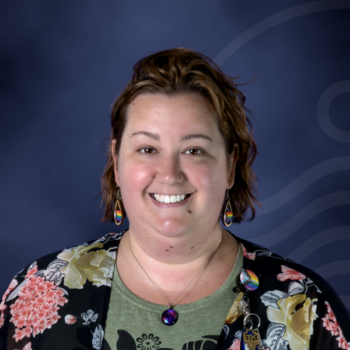
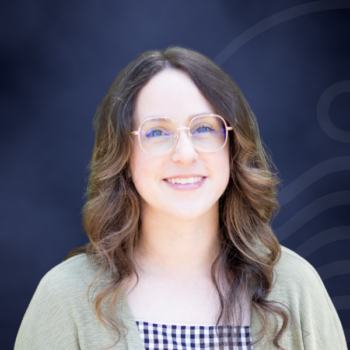
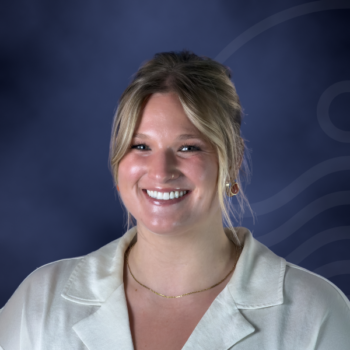
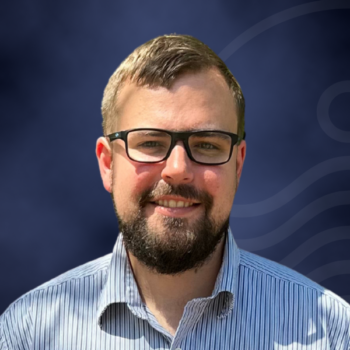
Psychiatrist
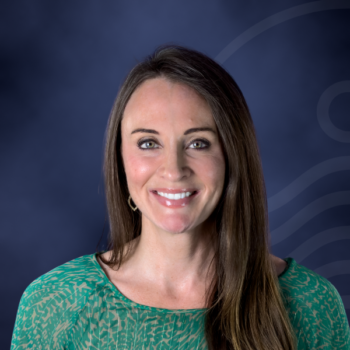
Psychiatric Physician Assistant
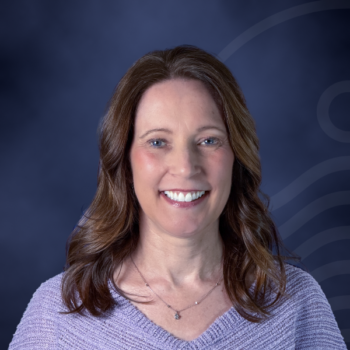
Psychiatric Physician Assistant
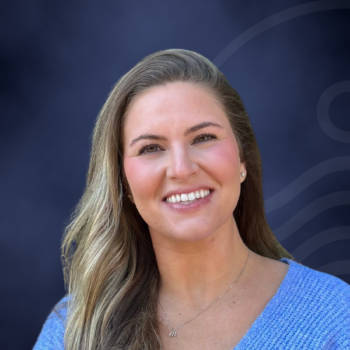
Clinical Therapist
At the core of AIM is our dedicated team, focused on fostering an environment where optimal wellbeing is achievable.
Driven by a vision of accessible, compassionate healthcare, our diverse professionals bring unique expertise and insights to enhance our mission. We believe in the power of connection and collaborative care. From clinical experts to supportive staff, every team member contributes to creating a nurturing environment that promotes growth, healing, and comprehensive wellbeing.